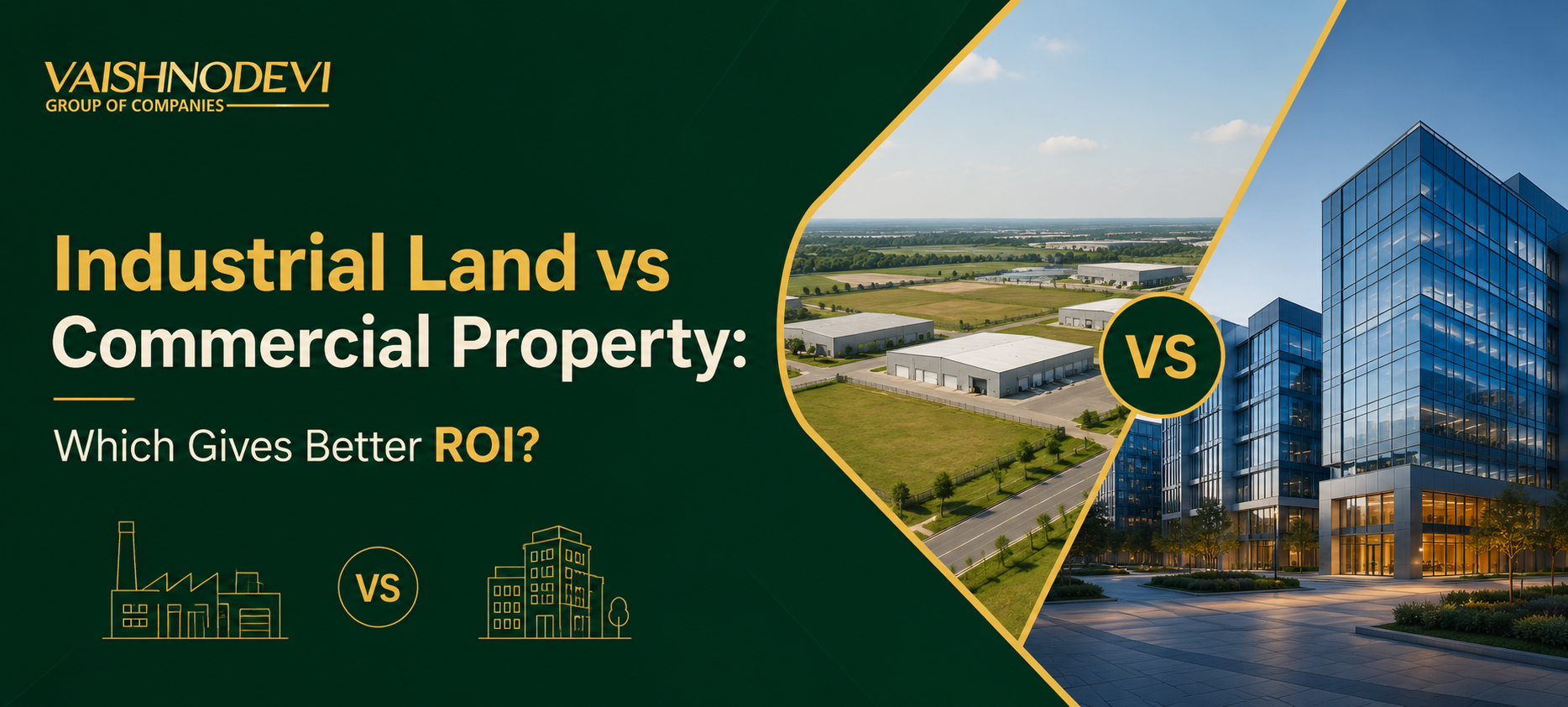
Industrial Land vs Commercial Property: Which Offers Better ROI?
The decision to invest in real estate is no longer restricted to only residential apartments and commercial office space. With the passage of time and the increased focus on long-term growth and business applicability, investors are now looking at other asset classes. One of the highly demanded assets right now is industrial land and commercial property.
There are several advantages in both sectors. However, return on investment is largely dependent on market demand, infrastructural expansion, functional use and long-term scaling. For investors trying to decide where to put their money, the comparison between these two sectors has become increasingly important.
While commercial properties are still considered a popular buyers' choice for rental income purposes, industrial land has the capability of providing long-term growth.
Understanding the Difference
Before comparing returns, it is important to understand how these two investments differ.
Commercial property generally includes the following:
- Office spaces
- Retail shops
- Showrooms
- Commercial complexes
- Business centres
These properties are usually purchased for rental income or resale purposes.
On the other hand, industrial land is primarily used for industrial operations such as:
- Manufacturing units
- Warehouses
- Logistics hubs
- Industrial parks
- Processing facilities
Industrial investment is more closely connected to business growth and infrastructure development.
Why Commercial Property Became Popular
For many years, commercial spaces were considered attractive because of rental income opportunities. Investors preferred office units and retail spaces because they generated regular monthly returns.
In high-demand locations, commercial properties can still provide steady occupancy and predictable cash flow. Businesses constantly require office and retail spaces, especially in growing urban centres.
Some common advantages include:
- Monthly rental income
- Higher visibility in urban areas
- Easier financing options
- Short-term leasing opportunities
However, the commercial segment has also become highly competitive in many cities. In certain locations, oversupply has affected rental yields and slowed appreciation rates.
Why Industrial Land Is Gaining Investor Attention
The industrial sector has changed significantly over the last decade. Earlier, industrial property was often viewed only as land for factories. Today, the situation is very different.
The growth of e-commerce, logistics, warehousing, manufacturing, and supply chain industries has increased demand for industrial land across major business regions.
Investors now see industrial assets as long-term growth opportunities rather than purely operational properties.
One major reason behind this shift is land scarcity near expanding industrial corridors. As infrastructure projects improve connectivity, industrial locations often experience steady appreciation over time.
This is why industrial land for sale in Bangalore is a growing area of interest among both investors and businesses.
Comparing ROI: Industrial Land vs Commercial Property
The question of better ROI depends on investment goals. Some investors prioritise monthly income, while others focus on long-term appreciation and asset growth.
Commercial Property ROI
Commercial spaces usually provide:
- Immediate rental opportunities
- Faster occupancy in active business areas
- Predictable lease income
But there are also challenges:
- High maintenance costs
- Tenant turnover issues
- Market fluctuations in office demand
- Competition from new developments
In some cases, investors may spend significant time managing tenants, vacancies, and maintenance expenses.
Industrial Land ROI
Industrial land generally works differently. Returns are often driven by future industrial expansion and infrastructure growth.
Advantages may include:
- Lower maintenance requirements
- Strong appreciation potential
- Demand from the manufacturing and logistics sectors
- Larger future development possibilities
As industrial activity increases around key cities, land values often rise steadily over time.
For example, industrial land for sale in Bangalore is more in demand because businesses actively seek locations connected to highways, transport corridors, and industrial zones.
Infrastructure Plays a Bigger Role in Industrial ROI
One important factor that separates industrial investment from commercial property is infrastructure dependency.
Industrial growth is heavily influenced by:
- Highway connectivity
- Freight corridors
- Industrial parks
- Logistics networks
- Transport accessibility
When infrastructure improves, industrial demand generally follows quickly. This directly impacts land appreciation.
Commercial property also benefits from infrastructure, but industrial land often sees stronger long-term value growth when industrial activity expands in surrounding areas.
Why Organised Industrial Parks Are Becoming Preferred
Many investors today are avoiding isolated industrial plots and instead choosing organised industrial developments.
Well-planned industrial parks usually provide:
- Internal roads
- Utility infrastructure
- Better accessibility
- Industrial zoning clarity
- Planned development environment
This makes the property more attractive for future industrial use as well as resale opportunities.
Projects like Vaishnodevi Group Phase 18 Industrial Park are gaining attention because investors increasingly prefer industrial land with proper planning and strategic connectivity.
For businesses, ready industrial infrastructure often reduces setup challenges and operational delays.
Which Investment Is Better for Long-Term Growth?
Commercial property may still suit investors looking for immediate rental returns in established business locations. However, industrial investment is becoming more attractive for buyers focused on future expansion and long-term appreciation.
Industrial sectors connected to warehousing, manufacturing, logistics, and exports continue to grow steadily across India. Because of this, industrial land is no longer considered a niche investment category.
Cities like Bangalore are witnessing growing demand for industrial spaces as businesses move toward larger operational setups outside crowded commercial zones.
This trend is one reason why industrial land for sale in Bangalore is attracting stronger investor confidence today.
There is no single answer to which investment category works best for everyone. The right choice depends on investment strategy, risk preference, and long-term goals.
Commercial property can offer regular rental income, but industrial investment often provides stronger appreciation potential where infrastructure and industrial development are expanding rapidly.
Final Thoughts
For investors looking beyond traditional real estate options, industrial land is a practical and future-focused investment segment.
Projects such as Vaishnodevi Group continue to attract attention from investors and businesses seeking well-connected industrial opportunities in Bangalore's growing industrial market.